Minnesota Packaging EPR: The Producer Guide for 2026
V. Jain · · 5 min read
Minnesota Packaging EPR: The Producer Guide for 2026
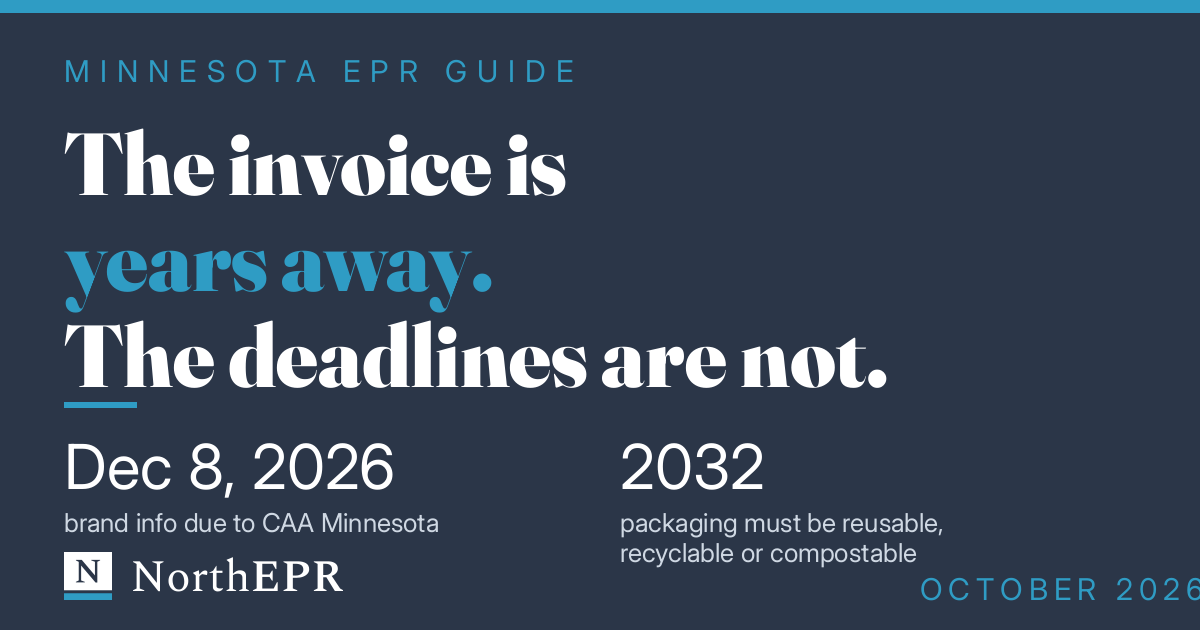
Minnesota's packaging EPR law is the one most producers still treat as future tense. It should not be. Registration with the producer responsibility organization is already open, brand information must be complete by December 8, 2026, and the needs assessment that shapes the entire program is due before the end of this year. Minnesota is not waiting until 2029. The deadlines that matter are now.
Here is what Minnesota's Packaging Waste and Cost Reduction Act requires of food and beverage producers, and what to do before the December clock runs out.
The law and the shared-responsibility model
In May 2024, Governor Tim Walz signed the Packaging Waste and Cost Reduction Act into law, making Minnesota the fifth US state with packaging EPR, after Maine, Oregon, California, and Colorado. The law covers packaging and paper products sold into the state.
Minnesota chose a shared-responsibility model, which makes it different from every other US state program. Producers ramp up their share of net recycling costs over time: at least 50 percent by February 1, 2029, at least 75 percent by February 1, 2030, and at least 90 percent by 2031. The remaining share stays with municipalities and other system participants. Compare that with Oregon, where producers are already paying full fees, which we covered in our Oregon producer guide.
There is also a design backstop with real teeth: by 2032, all packaging sold in Minnesota must be reusable, recyclable, compostable, or managed through an approved alternate collection system. Packaging that is none of those things cannot be sold in the state. The Minnesota Pollution Control Agency (MPCA) will publish a curbside recyclability list and an alternative collection list, and materials on neither list have a limited future in Minnesota. MPCA can extend the 2032 design deadline to 2040 for specific materials.
If you are new to the framework behind all of this, our complete guide to packaging EPR explains how producer responsibility works across the 16 jurisdictions we track.
Who counts as a producer in Minnesota
The obligated party is generally the brand owner: the company whose brand appears on the packaging sold to consumers in Minnesota. The definition also reaches packaging manufacturers and distributors depending on the scenario, and private-label arrangements are settled by contract, so the contract decides who registers.
Exemptions are narrow. Paper mills that make containerboard from 100 percent recycled content are exempt, as are mills using virgin wood fiber. Packaging for infant formula, medical equipment, and similar categories is excluded from the program. If you sell ordinary food and beverage packaging into Minnesota, assume you are in.
Our guide on who counts as an EPR producer walks through the producer hierarchy in detail. The concepts carry across jurisdictions even where the details differ.
Registration is open now, and there is a December 8 deadline
CAA Minnesota, the state-appointed producer responsibility organization, is already registering producers. If you are obligated under Minnesota's law, here is the part that matters this year:
- Register with CAA Minnesota if you have not. Registration is open now, and late registration is still possible. You cannot wait for the stewardship plan.
- Complete your brand information by December 8, 2026. CAA submits its annual list of registered producers and their brands to the regulator with a submission date of January 1, 2027. Producers must have brand information in the system by December 8, 2026 to be included on that submission. Producers who registered before October 8, 2026 must update their registration with brand information.
- Watch the needs assessment. The initial needs assessment is due December 31, 2026. It will inform recycling targets, waste reduction and reuse goals, and postconsumer recycled content requirements. The numbers in that document will shape what producers pay and what they must design for.
The longer timeline then runs: the PRO stewardship plan is due October 1, 2028, producers cover at least half of net recycling costs from February 1, 2029, at least 75 percent from February 1, 2030, and at least 90 percent by 2031.
What to build now, while fees are still zero
Minnesota is the rare EPR program where producers can see the entire cost curve before the first invoice arrives. That is an advantage only if you use it. Here is what to do:
- Build your SKU-level packaging inventory now. Every component, material, and weight for everything you sell into Minnesota. Fees will be calculated from your reported data; reconstructing history under pressure is how errors happen. For the mechanics, see our explainer on how EPR packaging fees are calculated.
- Audit against the 2032 design standard. If any of your packaging is neither reusable, recyclable, nor compostable, Minnesota has put it on a countdown. Price the redesign against the cost of being shut out of the state.
- Track sales and weights by brand. The brand-level submission requirement means data organized by brand, not just by company.
- Model the ramp. 50 percent of costs in 2029, 75 percent in 2030, 90 percent by 2031. Build it into your budgeting now, the way Colorado producers are doing as their program budget climbs each year. Our Colorado producer guide shows what that curve looks like in practice.
- Register, then stay registered. Minnesota's statutory requirement is membership in the PRO. The December 8 brand deadline is the immediate action, but the registration itself is the obligation.
Minnesota is the calm before the invoice
Oregon is already collecting fees. Colorado started collecting dues in January 2026. California's fee clock starts in January 2027. Minnesota is the one program where the invoice is still years away and the playbook is still being written, which makes 2026 the cheapest year to get your data in order.
Producers with clean, brand-level packaging data will register once and report calmly. Producers without it will spend 2028 and 2029 reconstructing SKU history while the needs assessment targets close in. The work is the same either way. Only the timing is optional.
We built NorthEPR to take this off your plate: software that shows food and beverage producers where they have to report, what they owe, and gets their filings ready on time across Canada and the US. We are opening 3 free pilot spots for a 2026 packaging-data health check plus first filing support. If Minnesota is one of your markets, take a look at the pilot.