How to Correct an EPR Report After You File It
Filed an EPR report with a wrong weight or a missing SKU? Every program has a correction route. Here is how to fix it in Quebec, Ontario, BC, and Oregon, and what to send.
Most packaging EPR programs exempt the smallest producers, but the line is different everywhere: revenue tests run from $1 million to about $5.8 million, and tonnage tests are usually one tonne. The thresholds for ten jurisdictions, and the traps that catch small brands.
Your packaging suppliers already hold most of the data your EPR reports need: component weights, materials, and spec sheets. Here is exactly what to ask for, a template you can copy, and what to do when a supplier goes silent.
EPR fees are charged by material weight, so programs want your packaging data at SKU level. Here is how to build that inventory: list every SKU, split each into components, weigh by material, and split by place of sale.
Ontario Blue Box producers face May 31, 2027 for both the supply and performance reports, with a May 15 handoff if a PRO files for you. The first performance audit, covering 2024 to 2026, is also due May 31.
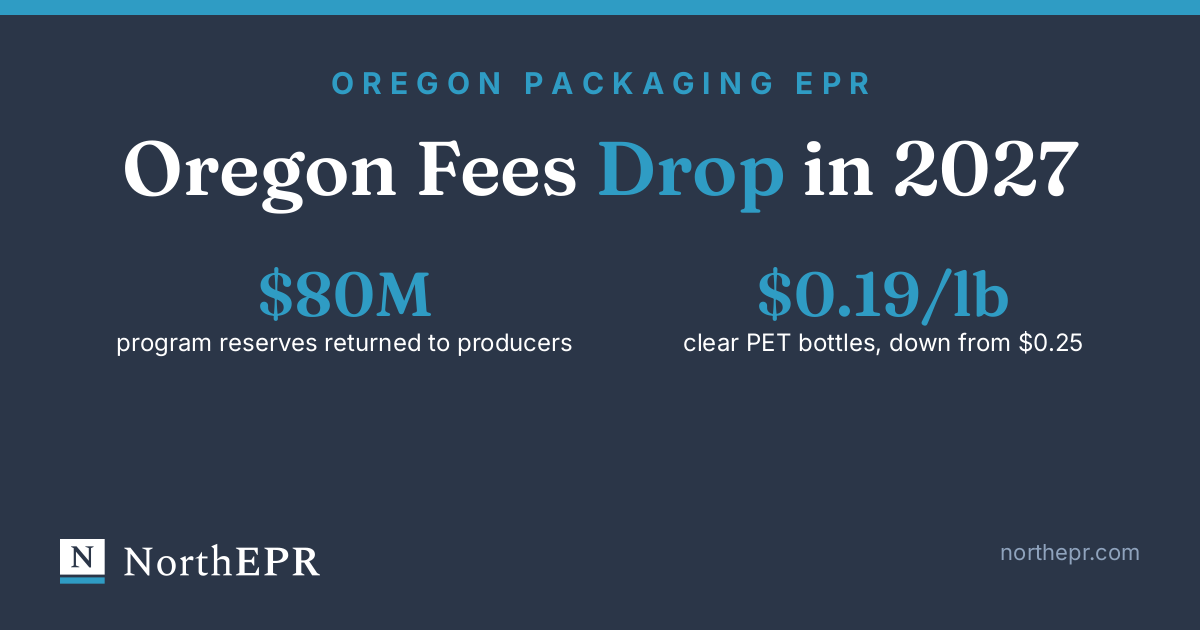
CAA's 2027 Oregon fee schedule cuts most rates: about $80M in program reserves returned to producers, no base fee on glass bottles, and annual fees split into January and July invoices. Here is what changed and what is still moving.
Food and beverage producers face the hardest version of packaging EPR: SKU churn, mixed materials, private label deals, and many programs at once. Here are the five checks to run before you pick a tool.
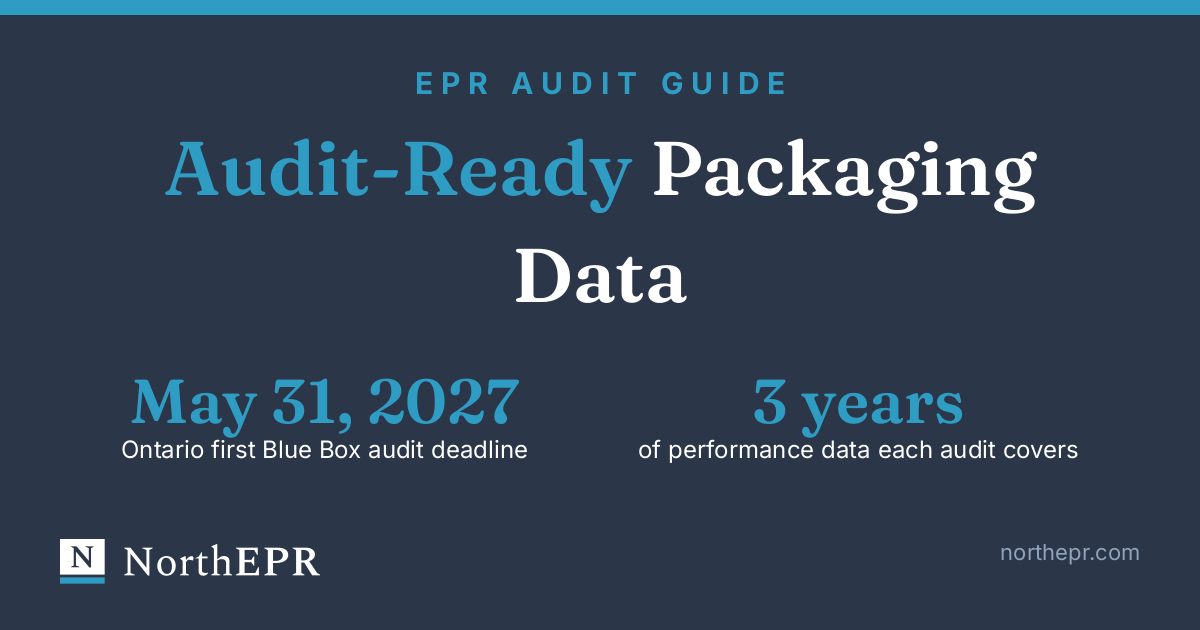
Ontario Blue Box producers face their first performance audit by May 31, 2027, covering 2024 to 2026 data. Here is what auditors ask for, the five records that make a file audit-ready, and how software keeps the evidence chain intact.
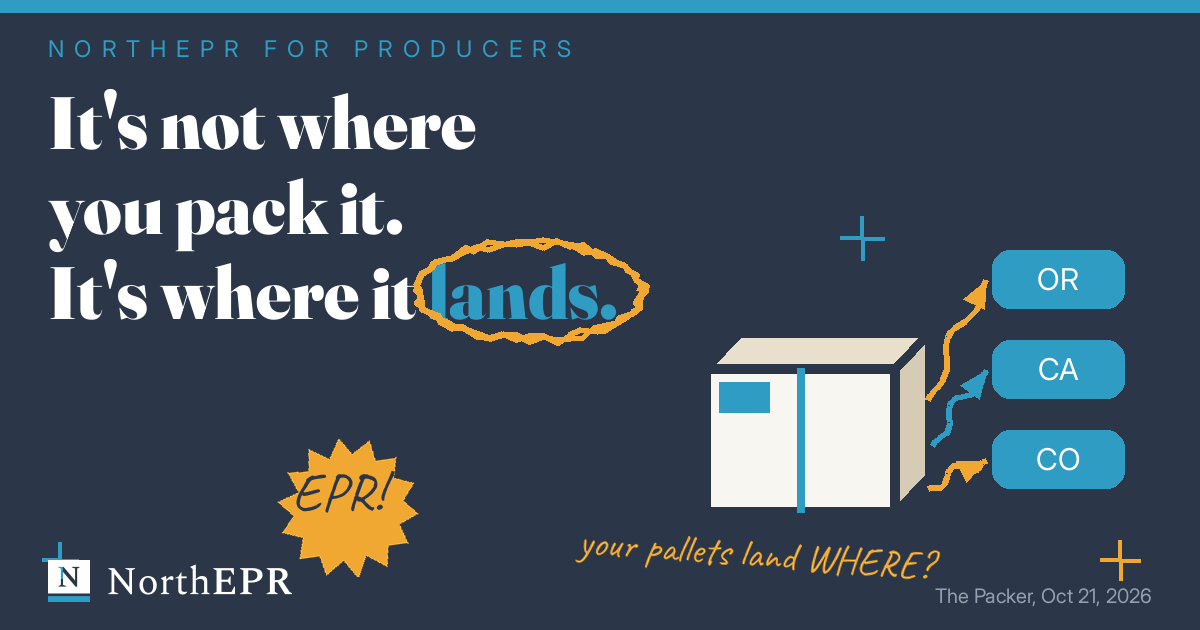
State EPR liabilities are triggered by where packaged goods land, not where they are packed. What Fox Packaging's Victoria Lopez told produce shippers at IFPA about the destination-state trap, the $20,000 consultant vs $300 fee gap, and mapping every state and province you sell into.
Joining a PRO is the first step of packaging EPR compliance. A step-by-step guide to registering with the right producer responsibility organization in each Canadian province and US state.
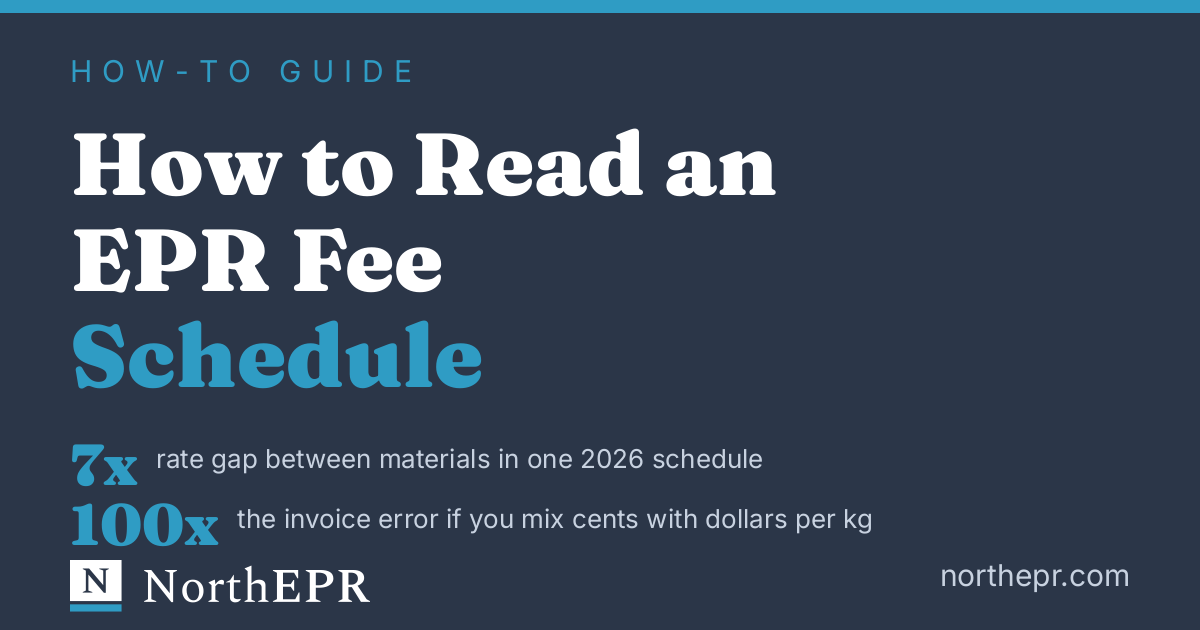
Every PRO publishes a yearly fee schedule that turns your reported packaging weights into an invoice. How to read the material rows, per-kg rates, units, and simplified tiers, plus the five mistakes that inflate producer fees.
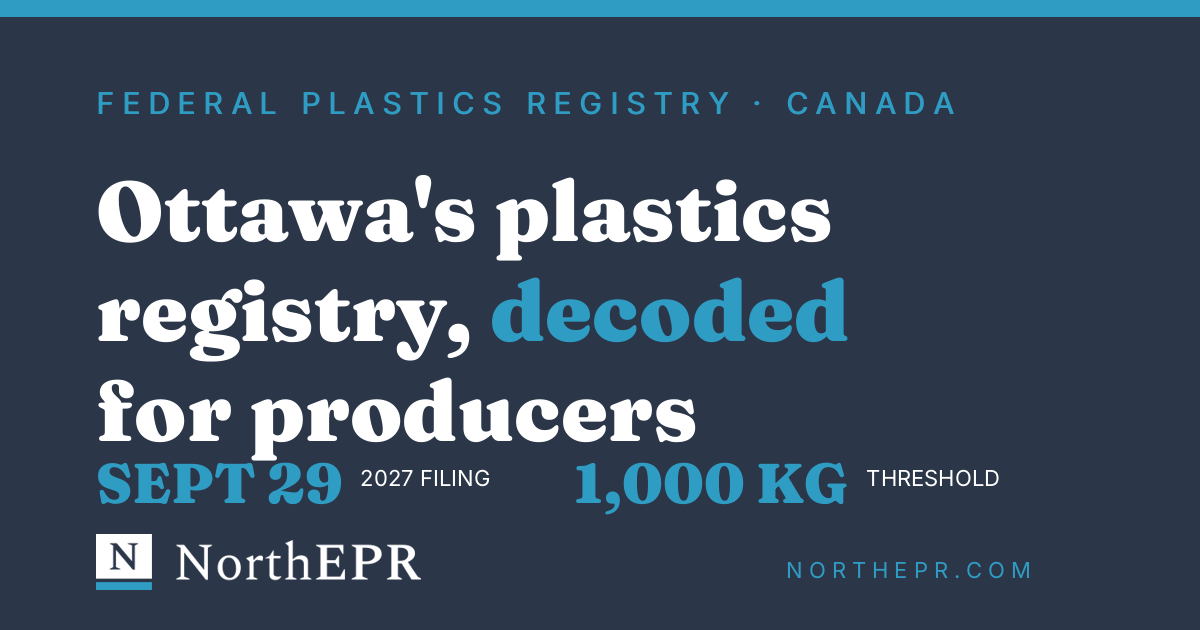
Ottawa's Federal Plastics Registry runs on an annual September 29 filing cycle. Who must report, the 1,000 kg threshold, what Phase 1 data covers, and how to get your 2026 data ready for the September 29, 2027 deadline.
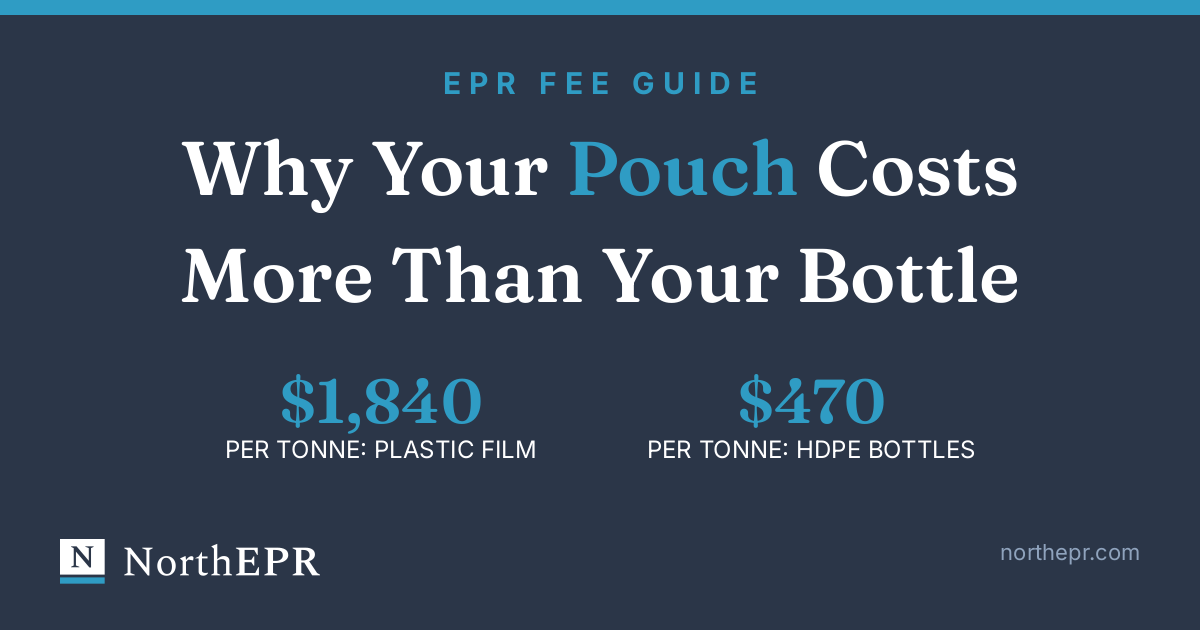
EPR fees are charged by material category, and the spread is huge: BC's 2026 schedule charges 184 cents/kg for plastic film vs 47 cents/kg for HDPE bottles. Here is how per-material fees work, why rates move every year, and how to estimate your bill.
Washington's Recycling Reform Act (SB 5284) made it the seventh US state with packaging EPR. The July 2026 PRO registration deadline has passed, and the March 2029 cutoff turns compliance into a market-access question. Here is the timeline, the reuse fund, and the producer checklist.
Maryland's SB 901 is now law, and the clock is running. Here is who must comply, the timeline from July 2026 to 2030, and what producers should do now.
Every EPR fee starts with a number on a scale. Here is the five-step method for weighing packaging components by material, SKU by SKU, so your first EPR report is accurate and audit-ready.
Minnesota's Packaging Waste and Cost Reduction Act is moving: CAA registration is open, brand info is due December 8, 2026, and the needs assessment lands December 31. Here is the shared-responsibility model, the timeline to 2031, and the producer checklist.
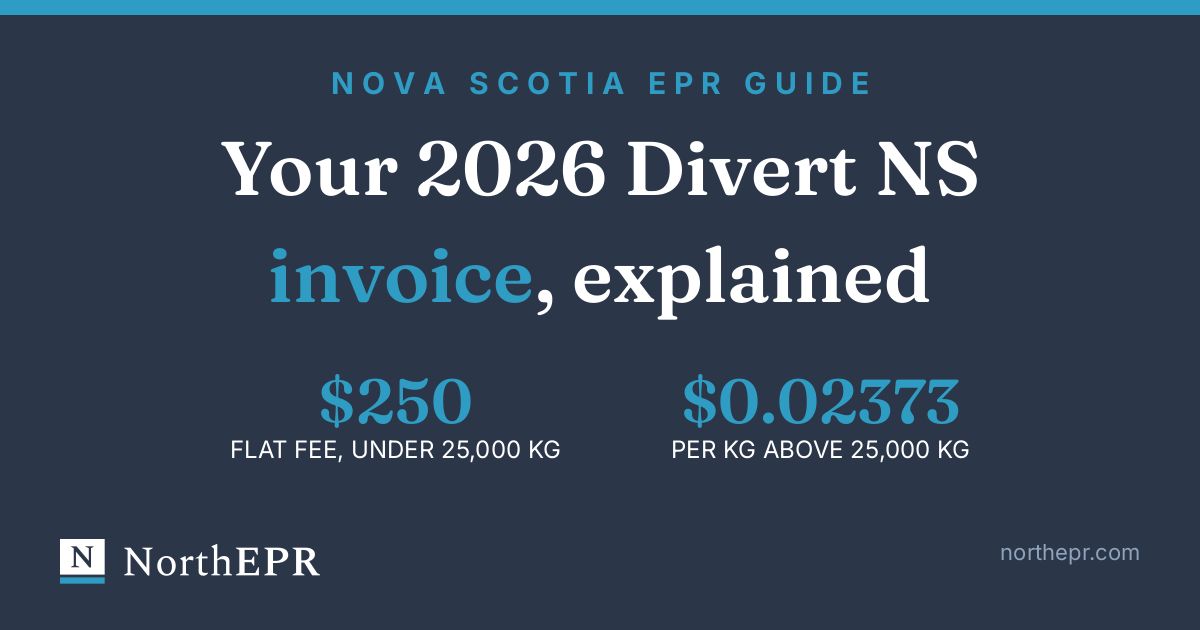
Divert NS invoiced 2026 packaging EPR oversight fees on October 1, due net 60 days. Here is the two-tier fee structure, the exemptions, and the producer checklist before the payment clock runs out.
What is a producer responsibility organization (PRO)? What PROs do, the major ones in North America (CAA, Circular Materials, ÉEQ, Recycle BC), and why you almost certainly need one.
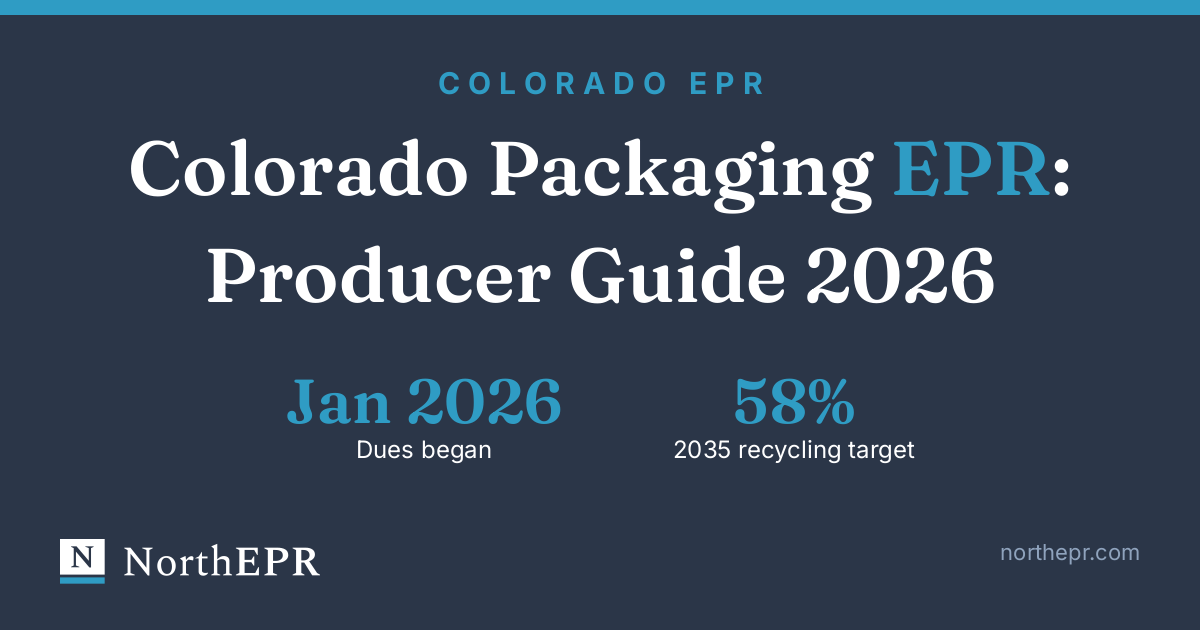
Colorado started collecting packaging EPR dues in January 2026. Here is the producer test, how CAA dues work, the NAW lawsuit, and the compliance checklist for food and beverage brands.
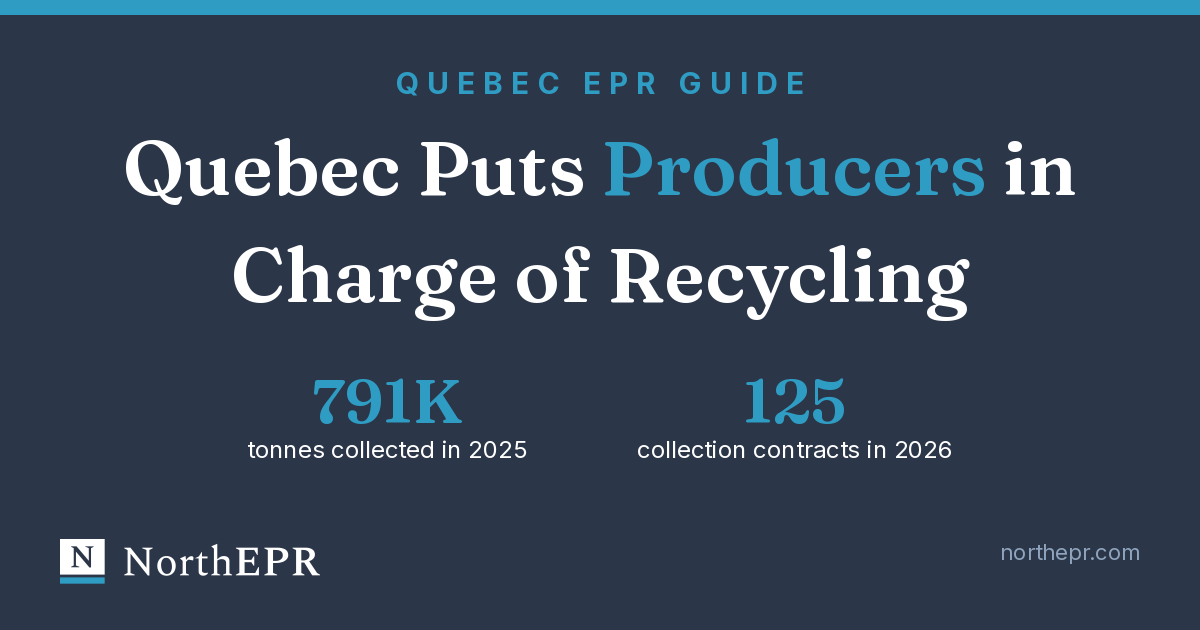
Quebec runs its curbside recycling under full producer responsibility through Éco Entreprises Québec. Here is the producer test, the 2026 fee schedule, eco-modulation penalties, and what to do now.
Who counts as a producer under packaging EPR laws? The brand owner hierarchy, private label traps, e-commerce sellers, and small-producer exemptions with real thresholds.
Packaging EPR in five steps: determine your obligation, register, report packaging data, pay fees, and meet targets. The same loop runs in every jurisdiction.
Oregon's Recycling Modernization Act is already collecting fees: what counts as a producer, how CAA fees work, and the compliance checklist for food and beverage brands.
The UK Conservatives pledged to abolish packaging EPR, calling it a grocery tax. The politics are worth watching, but the compliance lesson for North American producers is simpler.
Oregon DEQ opened CAA's third program plan amendment for comment: covered material categories, glass fees, and performance metrics are all on the table. Comments close 5 p.m. PT on October 19, 2026.
The complete guide to packaging EPR for food and beverage producers: what it is, who it hits, how the system works, where it applies across Canada and the US, and what compliance looks like.
California SB 54 fees begin in 2027. Here is who counts as a producer, the key deadlines, what the fees look like, and the six things food and beverage brands should do now.