Oregon Packaging EPR Fees 2027: What to Expect
V. Jain · · 5 min read
Oregon Packaging EPR Fees 2027: What to Expect
In short
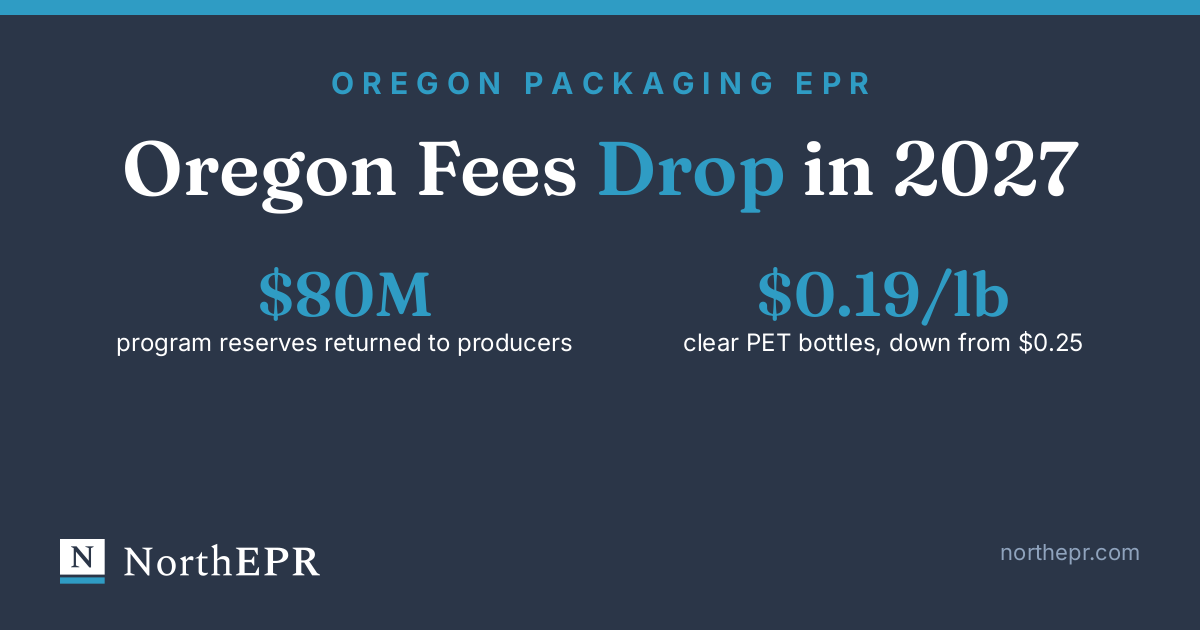
Circular Action Alliance published its 2027 Oregon producer fee schedule on October 1, 2026, and most rates are going down. CAA is returning about $80 million in program reserves to producers through lower rates, plus $3 million in previously collected Solid Waste Integrated Management (SIM) fees. Glass bottles carry no base fee in 2027, clear PET bottles fall to $0.19 per pound from $0.25, and your annual fee will be split into two invoices: 50 percent in January and the rest in July.
Why fees are falling
Oregon's program, run under the Recycling Modernization Act, has been collecting fees since July 2025. The first years built up reserves faster than the system spent them, and for 2027 CAA is giving a large share of that balance back through reduced rates rather than holding it.
Glass is the headline change. Glass bottles carry no base fee in 2027, reflecting changes to glass collection under DEQ's recently adopted temporary rules, which are expected to be made permanent early next year, combined with the drawdown of program reserves.
What changed, material by material
Key rates for food and beverage producers, from CAA's 2027 Oregon Producer Fees Schedule:
- Glass bottles: no base fee in 2027.
- Rigid PET (#1) bottles, clear: $0.19 per pound, down from $0.25 in 2026.
- Rigid PET (#1) bottles, pigmented or color: $0.53 per pound, down from $0.67 in 2026.
- Plastic laminates and other flexible plastic packaging: $0.56 per pound, down from the 2026 base fee of $1.02.
If your packaging mix is heavy on flexible films and pouches, the laminate cut nearly halves that line of your bill. Our guide on how to read an EPR fee schedule walks through how to turn a rate table into a real number for your product line.
The new invoice rhythm
Producer annual fees will be divided into two payments. The first invoice, issued in January, covers 50 percent of the amount owed, and the second, in July, covers the remainder. The January invoice lands as many producers close their year end books.
What is still moving
The NAW court fight. The National Association of Wholesaler-Distributors filed a motion in October 2026 asking the US District Court for the District of Oregon to stay enforcement of the law for its members while its appeal is pending before the Ninth Circuit. CAA's next invoices go to NAW members in January 2027, months before the appeals court is expected to hear argument, leaving members caught between paying fees they may not recover and facing compounding late fees and DEQ enforcement, with civil penalties of up to $25,000 per day, according to Resource Recycling's report on the motion. Unless you are a NAW member covered by the earlier injunction, plan on paying the January invoice.
The third program plan amendment. CAA submitted a third amendment covering changes to covered material categories, flexibility to update glass fees if regulations change, updates to the Specifically-Identified Materials list, and a new performance metric measured in pounds of Uniform Statewide Collection List material collected per household. The public comment window closed at 5:00 p.m. PT on October 19, 2026, and DEQ reviews amendments through the process in ORS 459A.881, per DEQ's program updates page. If the material categories change, the categories your 2027 fees are calculated from could move with them.
The third rulemaking. DEQ's third RMA rulemaking is open for comment until 4:00 p.m. on October 30, 2026, today, with the final proposed rules headed to the Environmental Quality Commission in early 2027. If you have a view on the acceptance lists or fee exemptions, today is the last day to send it to RMARulemaking3@deq.oregon.gov.
Check whether you are exempt before you budget
Oregon exempts small producers: businesses earning less than $5 million in global annual revenue, or selling less than one metric ton of covered products into Oregon each year, do not have to pay fees, according to the City of Portland's summary of the law. Meeting either threshold is enough. If you are close to either line, confirm your status first. Our explainer on who counts as an EPR producer walks through how the obligation is assigned.
What producers should do now
- Model 2027 fees at the new rates. Pull your 2026 Oregon supply data by material and weight, apply the 2027 schedule, and compare it with what you paid in 2026.
- Budget for two invoices. Put the January 50 percent payment and the July balance in your 2027 cash flow plan.
- Watch the amendment and the rulemaking. Both could change the categories and rules behind your fees.
- Keep your data clean. Fee schedules change every year. The producers who come out ahead are the ones whose SKU-level packaging data is ready to rerun the moment a new schedule drops.
The bottom line
Oregon's 2027 schedule is good news for most producers: lower rates, a zero base fee on glass, and a split invoice that spreads the cash flow. But the program is still being rewritten, with a court fight, a plan amendment, and a rulemaking all in motion. Treat the 2027 rates as your planning baseline, not a settled number.
We built NorthEPR to take this off your plate: software that shows where you have to report, what you owe, and gets your filings ready on time. We are opening 3 free pilot spots for a 2026 packaging-data health check plus first filing support. If Oregon is one of your markets, take a look at the pilot.
Sources
- CAA Releases 2027 Oregon Producer Fees Schedule, Wine Institute
- Oregon DEQ, Modernizing Oregon's Recycling System, program updates
- NAW Asks to Pause Oregon EPR Fees, Resource Recycling
- City of Portland, Recycling Modernization Act summary
This is general information, not advice about your company. Confirm deadlines, fees, and obligations with each program or PRO before acting.