California SB 54: What the Dec 28 Decision Means for Producers
V. Jain · · 5 min read
California SB 54: What the Dec 28 Decision Means for Producers
In short
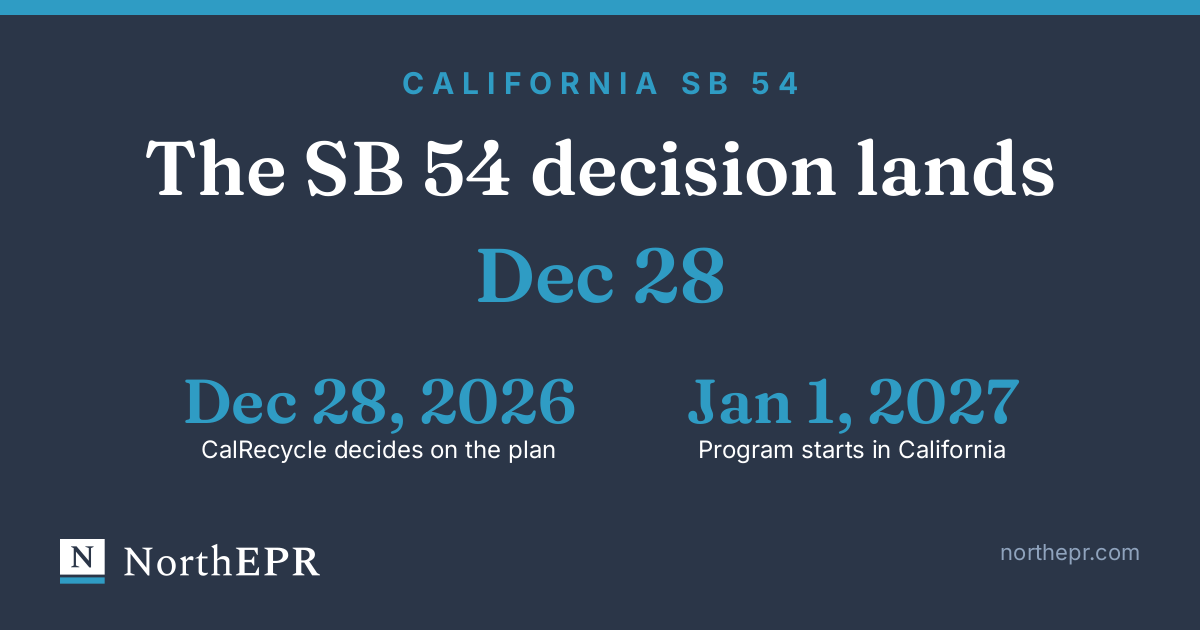
CalRecycle will decide by December 28, 2026 whether to approve Circular Action Alliance's plan for running California's packaging EPR program. If the plan is approved, or approved with conditions, the program starts January 1, 2027. From that date, producers may not sell covered packaging in California unless they belong to an approved PRO, and the first source reduction target, a 10 percent cut in plastic covered material, comes due. If you sell packaged goods in California, the next six weeks are the time to get your packaging data in order.
How we got here
On October 13, 2026, Circular Action Alliance (CAA) submitted its revised California program plan to CalRecycle. The plan is the operating manual for SB 54: fees, funding, reporting, and how the state hits its targets.
The draft went through a 60-day public comment period from June 15 to August 14, 2026, and drew more than 2,400 comments from local jurisdictions, trade associations, producers, and the state's advisory board. CAA on the revised plan
CalRecycle now has 75 days to review the plan under the SB 54 regulations, and CAA says the decision lands by December 28. CalRecycle is also taking public comments on the submitted plan through November 13, 2026, one day after this post goes out. Comments go to packaging@calrecycle.ca.gov with the subject line "PRO Plan Comments". CalRecycle SB 54 page
Three possible outcomes
CalRecycle can approve the plan, approve it with conditions, or disapprove it. It can also ask CAA for more information or set a timeline for a decision.
Approval is the straightforward path: the program starts January 1, 2027 as written. Conditional approval is nearly as good for producers: a conditionally approved plan counts as approved while CAA works through the conditions, according to CAA's chief of staff. Disapproval is the disruptive outcome, and it would force a scramble to keep the January 1 start date intact.
Plan as if January 1, 2027 is real: the law's dates do not move with the review.
What January 1, 2027 requires
First, you need to be in a PRO. From January 1, 2027, producers may not sell products in California unless they have been approved to participate in a CalRecycle-approved PRO. CAA is the first PRO CalRecycle has approved. If you have not registered yet, our California SB 54 registration guide walks through the steps.
Second, the first source reduction target comes due. SB 54 requires a 10 percent reduction in plastic covered material by January 1, 2027, measured against the baseline CalRecycle published. Producers submit individual source reduction plans to their PRO, stating how much plastic they will cut by number of components and by weight. SB 54 statutory text, Public Resources Code section 42057 CalRecycle published an update to its Source Reduction Baseline Report and guidance on November 2, 2026.
Third, fees start to take shape. The plan sets a 2027 program budget of $1.105 billion, down from as much as $1.87 billion in the June draft, and it includes proposed 2027 producer fee rates. Those rates are good-faith estimates and do not become operative unless the plan is approved, so treat any fee number from the plan as provisional until December 28.
The longer targets are already fixed in law: a 30 percent recycling rate for covered plastic by 2028, 40 percent by 2030, and 65 percent by 2032, with a 25 percent cut in single-use plastic by 2032 and all single-use packaging and plastic food service ware recyclable or compostable by 2032.
What producers should do now
Comment by November 13 if the plan affects you. One email to CalRecycle is the cheapest influence you will ever have over a billion-dollar program.
Confirm your PRO registration. If you sell packaged goods in California and you are not yet registered with CAA, do that before the decision lands, not after.
Get component-level packaging data ready. Source reduction is counted by plastic component and by weight, so your reporting needs to go deeper than total packaging tonnage. For each SKU, list every plastic component, its material, and its weight. Our guide on getting packaging data from suppliers covers how to ask for it.
Do not budget against the proposed fee rates yet. The $1.105 billion budget and the proposed rates will change if CalRecycle attaches conditions. Build your 2027 budget as a range, and read our California SB 54 fees guide for how the fees are structured.
The bottom line
December 28 is the last big gate before SB 54 goes live. Approval or conditional approval means January 1, 2027 starts on schedule, with PRO membership and the first source reduction target both due. The producers who will be ready are the ones who already have their packaging data at component level and their PRO registration done.
We built NorthEPR to help food and beverage producers get exactly that ready: packaging data at SKU level, filings prepared across Canada and the US, and no last-minute scramble when a deadline lands. We are opening 3 free pilot spots right now: a 2026 packaging-data health check plus first filing support. Take a look at the pilot.
Sources
- CalRecycle, Plastic Pollution Prevention and Packaging Producer Responsibility Act
- Circular Action Alliance, CAA Submits Revised California Program Plan to CalRecycle, Oct 13, 2026
- Circular Action Alliance, October 2026 producer newsletter, decision by Dec 28
- Circular Action Alliance, California Program Plan Public Comment Period
- SB 54 statutory text, California Public Resources Code
- Keller and Heckman, CalRecycle Announces First PRO to Implement SB 54
- Resource Recycling, CAA trims first-year SB 54 budget in final plan, Oct 13, 2026
- Packaging World, CAA Proposes 2027 California EPR Fees as CEO Fielkow Steps Down, Oct 16, 2026
This is general information, not advice about your company. Confirm deadlines, fees, and obligations with each program or PRO before acting.